In the press….
———————————————————————————————————————————————–
Shark Fin Trade Banned In California: Jerry Brown Signs Bill
The Huffington Post: Judy Lin 7 Oct 2011
SACRAMENTO, Calif. — California’s governor announced Friday that he signed a bill banning the sale, trade and possession of shark fins to protect the world’s dwindling shark population. Gov. Jerry Brown signed AB376 over objections that the fins are used in a soup considered a delicacy in some Asian cultures. California joined Hawaii, Washington, Oregon and Guam in the ban that environmental and animal rights activists hailed for closing off Pacific ports in the U.S. to the shark fin trade. “The practice of cutting the fins off of living sharks and dumping them back in the ocean is not only cruel, but it harms the health of our oceans,” Brown wrote in a statement.
———————————————————————————————————————————————–
The NY Times features posts from Stuart Sandin
The New York Times: Science: Stuart Sandin 12, Nov 2010
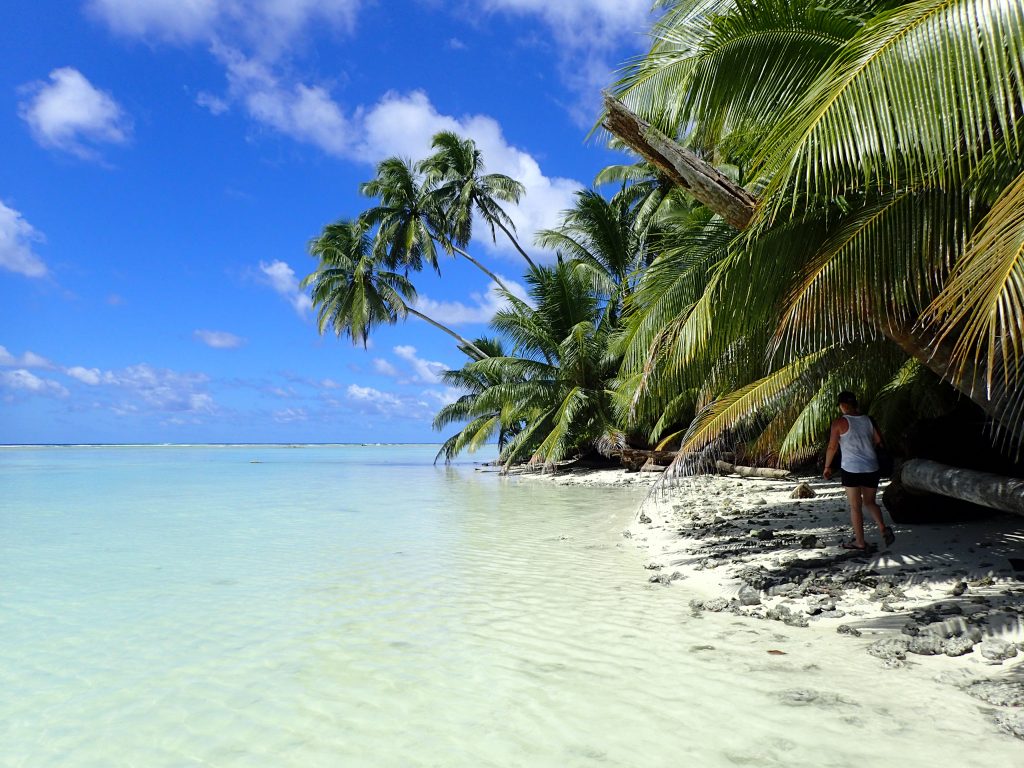
Last night, sitting on the deck of the ship, I smelled fire. Not a fire that would cause the captain of the Hanse Explorer to sound the alarm, but fire from the island off our starboard side. The people of Tabuaeran — which is also known as Fanning Island — were stoking the flames to cook fish that they had caught from the surrounding coral reefs earlier in the day. This was the first time I had smelled smoke during this expedition….
———————————————————————————————————————————————–
Check out the new Coral Health Index Guidebook.
Download the CHI guidebook here
———————————————————————————————————————————————–
Why So Many Predators?
The New York Times: Science. Eleanor Sterling 29 July, 2010.
This morning I woke up to a huge splash just offshore. I don’t even look any more as I know it is a large predator, either a jack or a shark, feeding in the lagoon. You get used to them here. You have to. The six scientists from the American Museum of Natural History, at this field station for two weeks to study sea turtles, regularly see at least 10 sharks, and sometimes we see 40 to 50 in a day if we concentrate. I am particularly fond of the shark pups – the size of my forearm or so – but the often-curious larger sharks (black tips in the shallow flats as well as Galapagos sharks on the deeper dives) can be a bit disconcerting, especially if you are concentrating on something else and only notice them as they swim past for a closer look. Other scientists have had close encounters with tiger sharks, but I have not yet seen them. I just see evidence of them on the turtles. When we are checking turtles over in the health analyses, we see healed wounds that make me crazy trying to figure out how the turtles survived. In some, the shell looks like a cookie with a bite out of it.
——————————————————————————————————————————————————–
Dr. Sandin on Coral Reef Conservation
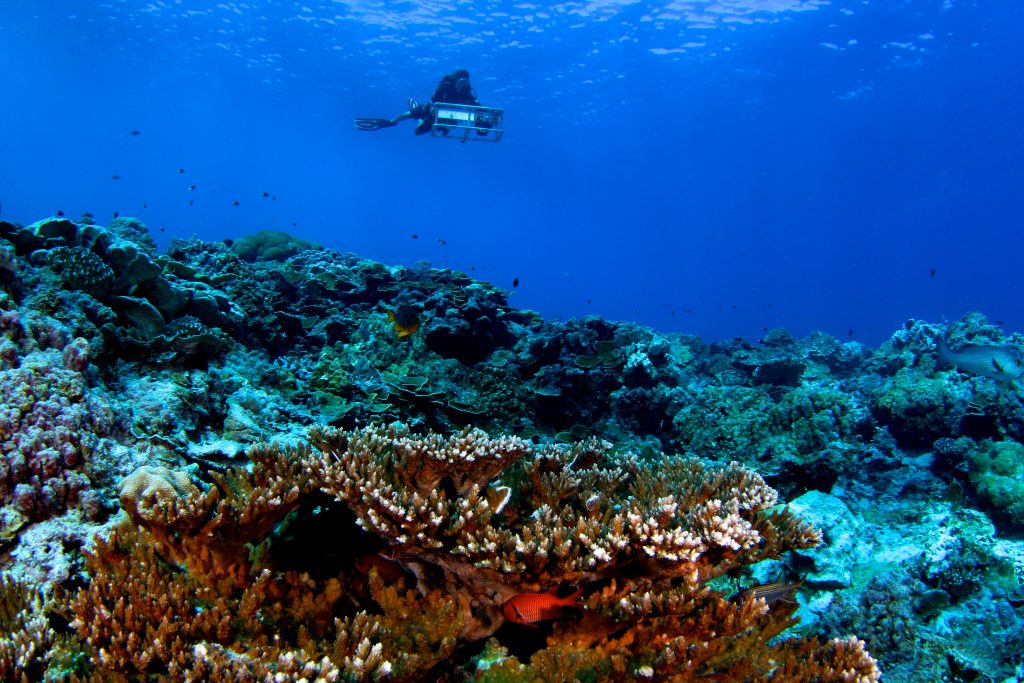
Coral reef conservation field work by Dr. Stuart Sandin, Scripps Institution of Oceanography at UC San Diego, looking at human impacts on coral reef ecosystems in the Line Islands, which are located in the central Pacific Ocean, and working on conservation and management strategies.
——————————————————————————————————————————————————–
Captain Coral
Students filmed this short clip on “The secret life of a marine ecologist at Scripps Institution of Oceanography” as part of the CMBC Master’s program. See more student videos on marine science and conservation on the Shifting Baselines website. Learn more about the program by visiting the Center for Marine Biodiversity and Conservation.
——————————————————————————————————————————————————–
Successes at sea, despite doom-and-gloom stories
San Diego Union-Tribune. Stuart Sandin, 3 July 2009.
Reports about ocean health are frequently dramatic and disconcerting. The oceans are filled with toxic chemicals and thriving bacterial populations, leaving it unsafe for swimming and other activities. We have pulled most of the fish out of the water and the rest are threatened with extinction in the coming decades. And with the climate changing, it is only a matter of time until hot, acidic seawater dooms the last of the denizens of the deep to disaster.
Given reports like these, it is not surprising that the job “oceanographer” earned the dubious honor of being the second worst job in science as rated by a popular science magazine. When read end to end, there appear to be few positives about the state of the ocean and fewer yet about being a professional working with the ocean. It was against this somber backdrop that over 1,000 marine scientists and managers met recently in the nation’s capital at the inaugural International Marine Conservation Congress to discuss the future of the world’s oceans.
——————————————————————————————————————————————————–
Protecting our seas
Would marine conservation meet with Teddy Roosevelt’s approval?
San Diego Union-Tribune. Stuart Sandin, 9 March 2008.
The phrase “shifting baseline” was coined by Daniel Pauly, a Canadian fisheries scientist, to describe the change in perspective that human society has undergone through time, in particular with respect to the state of our oceans’ health. Although our parents may remember an active cod fishery off Nova Scotia, we now accept that cod is not common in the markets and that the fishery is only sporadically open.
Continue back a couple of generations and consider our forebears who fed nations far and wide with cod, a fish that seemed limitless. Our general acceptance of the paltry supply of cod, something that would shock our predecessors, is one example of a shifted baseline of our generation. The dramatic shift of our oceans’ resources is not limited only to the eastern seaboard but is widespread across the globe.
——————————————————————————————————————————————————-
Fishing Takes Toll on Shark Populations
KPBS Public Broadcasting. Ed Joyce, August 6, 2008
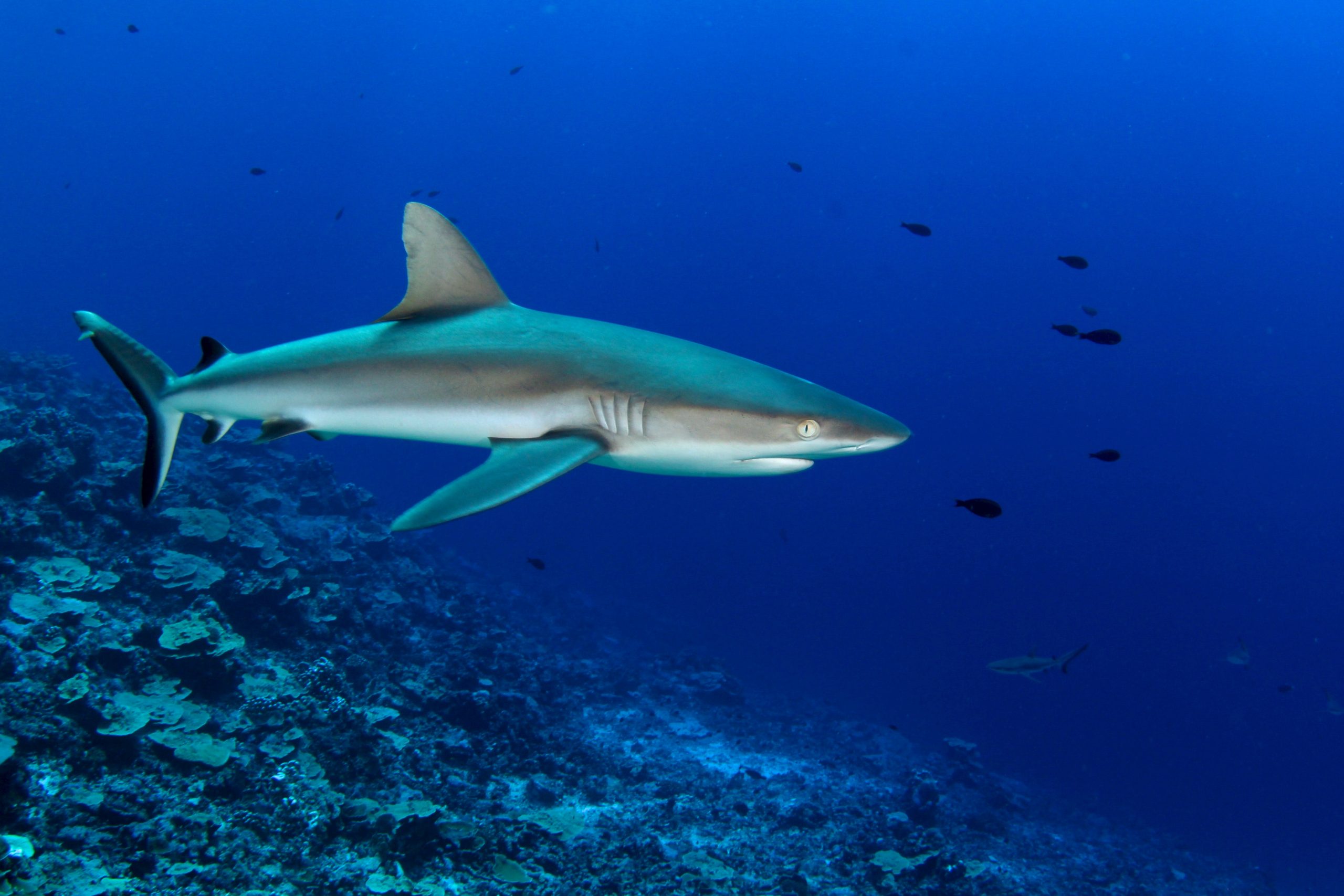
A new study says sharks are necessary for healthy oceans, but commercial fishing is taking a toll on their populations. Each year, tens of millions of sharks are caught only for their fins. KPBS Environmental Reporter Ed Joyce spoke with a marine biologist at the Scripps Institution of Oceanography about the role of sharks in the ocean ecosystem.
——————————————————————————————————————————————————-
Local researchers assess range of coral ecosystems
Union Tribune. Mike Lee, 26 February 2008
The few pristine coral reefs remaining in the world are teeming with biological diversity – a stark contrast to the damaged reefs where microbes, algae and small fish have replaced sharks, snappers and other large predators. That’s the conclusion of a landmark pair of studies to be published online tomorrow by a multidisciplinary team of researchers, including some from UCSD’s Scripps Institution of Oceanography and San Diego State University. They said the findings form a comprehensive baseline for marine biologists and conservationists trying to preserve what’s left of reefs, which are huge tourist attractions and major producers of seafood for people worldwide. The insights also underscore the sheer difficulty of restoring these habitats.
——————————————————————————————————————————————————-
Paradise Redefined:
A journey to a coral reef chain hidden in the Central Pacific forces scientists to revisit the definition of a pristine environment
SIO Explorations. Mario C. Aguilera
For marine ecologists, a chance to travel back in time to study pristine ocean environments is an enticing proposition. How did earlier, unspoiled marine ecosystems differ from today’s? How rich was marine fauna without impacts from fishing, pollution, and global ocean warming? How did their underlying functions differ from today’s imperiled oceans?
For a group of scientists at Scripps Institution of Oceanography at UC San Diego and their colleagues, the time travel dream became reality. In the summer of 2005, the researchers traveled thousands of miles across the Pacific Ocean to study a string of coral reefs tucked away in a tropical island chain. What they saw was alarming, yet ripe with scientific potential and hope for the future.
——————————————————————————————————————————————————-
Reefs in Trouble: Life on the Mean Reefs
Science. Christopher Pala, 14 December 2007.
The short, nasty existence for reef-dwelling fish at two primeval atolls suggests that intensive fishing elsewhere has skewed predator-prey dynamics.
Imagine an atoll in the time of Eden. It would be teeming with fish, a few big ones and a lot of little ones swarming among the coral reefs.
Think again, says a group of marine biologists who have been studying the Line Islands south of Hawaii. Led by researchers at the Scripps Institution of Oceanography in San Diego, California, they are comparing Kingman and neighboring Palmyra–U.S. possessions that are among a handful of Pacific atolls virtually untouched by humans–with Fanning and Christmas, which belong to Kiribati and respectively have some 3000 and 6000 residents.
——————————————————————————————————————————————————-
Deep Trouble
Smithsonian. Mark Schrope, 24 September 2007
Coral reefs are clearly struggling. The only debate for marine scientists is whether the harm is being done on a local or global scale
——————————————————————————————————————————————————-
Understanding the World’s Oceans:
Scripps Researchers Travel World to Study Reefs, Fish and Corals
This week at UCSD. Ioana Patringenaru, 9 October 2006.
They examined coral in Tahiti while the warm waters of the Pacific Ocean gently lapped at their feet. They caught fish on an atoll located 1,000 miles south of Hawaii. They dove off Christmas Island.
It might sound like a vacation to you. But researchers from UCSD’s Scripps Institution of Oceanography actually spent their summer trying to make sure that the rest of us will be able to enjoy the world’s oceans for many years to come.